
How Railroads Shaped Kings County Communities
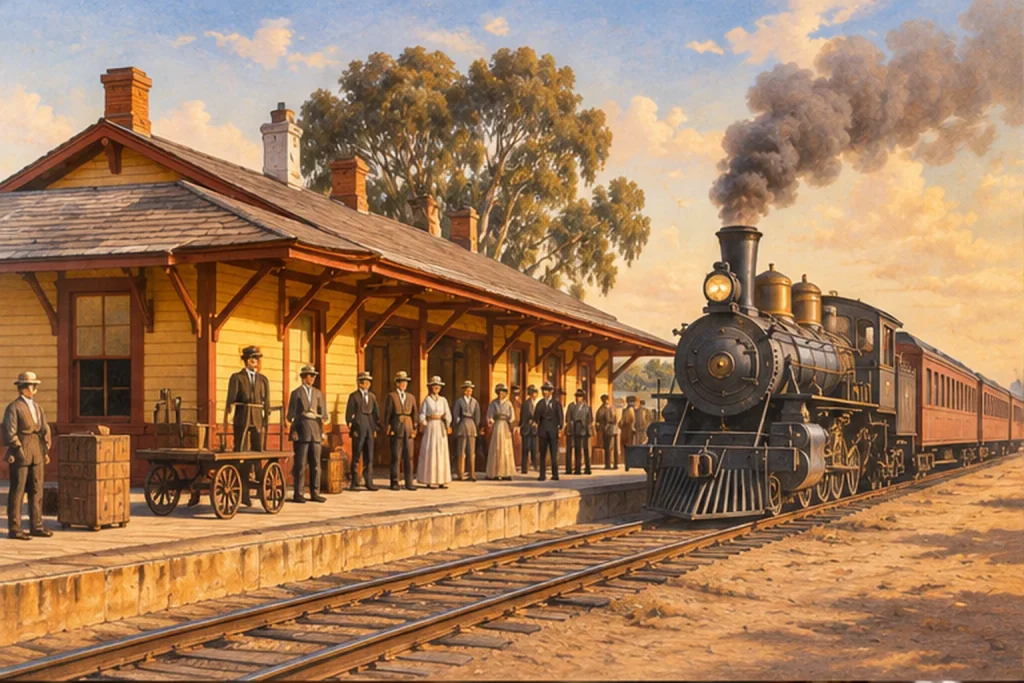
A railroad can change a town before most of its buildings are constructed. It influences where goods travel, which streets become busy, where newcomers settle, and how people imagine opportunities beyond their immediate community. In Kings County, California, the arrival of rail transportation in the nineteenth century helped connect agricultural districts and developing towns to a wider network of commerce.
The railroad story is not only about locomotives and timetables. It is also about neighborhoods, farms, labor, land ownership, and difficult disputes. Following the tracks through local records reveals why particular places grew and why transportation became such an important part of the county’s history.
The railway and the beginnings of Hanford
The City of Hanford’s official history identifies 1877 as a defining year. Southern Pacific rail construction helped establish a settlement that developed into Hanford. Land sales and commercial activity followed. The route created a valuable connection for people who wanted to move agricultural products, obtain supplies, and participate in a growing regional economy.
Hanford’s name is associated with James Madison Hanford, who worked for the railroad. The city history describes how the settlement became a trading center with strong railway backing. That relationship shows how transportation companies could influence the geography of new communities. A railway stop was more than a place to board a train; it could become the focus of economic and civic life.
Why the location of a station mattered
A station made travel and freight handling more convenient for nearby businesses. Warehouses and shops could cluster around reliable access to arriving goods. Roads leading to the station became important routes for wagons and later vehicles. Over time, those practical connections shaped which streets developed into commercial centers and which remained quieter.
Old maps are especially useful for seeing this pattern. Compare the tracks, street grid, depot, and early businesses. Not every town followed the same path, so it is important to use local plans and records rather than assuming a universal pattern.
Reading a railroad photograph
In a historic station photograph, examine signs, freight platforms, buildings, track arrangements, clothing, and vehicle types. They may help establish a likely period, but a professional archive’s catalog details should take priority over a guess based on visual style. Where a photograph has no reliable date, say so.
How rail connections influenced Lemoore
Lemoore’s development provides another useful example. The city’s General Plan history describes the Southern Pacific Railroad’s arrival in 1877 and explains that the route influenced the movement of the downtown commercial center toward E and D streets. That is a specific example of how track placement could reshape a town’s physical layout.
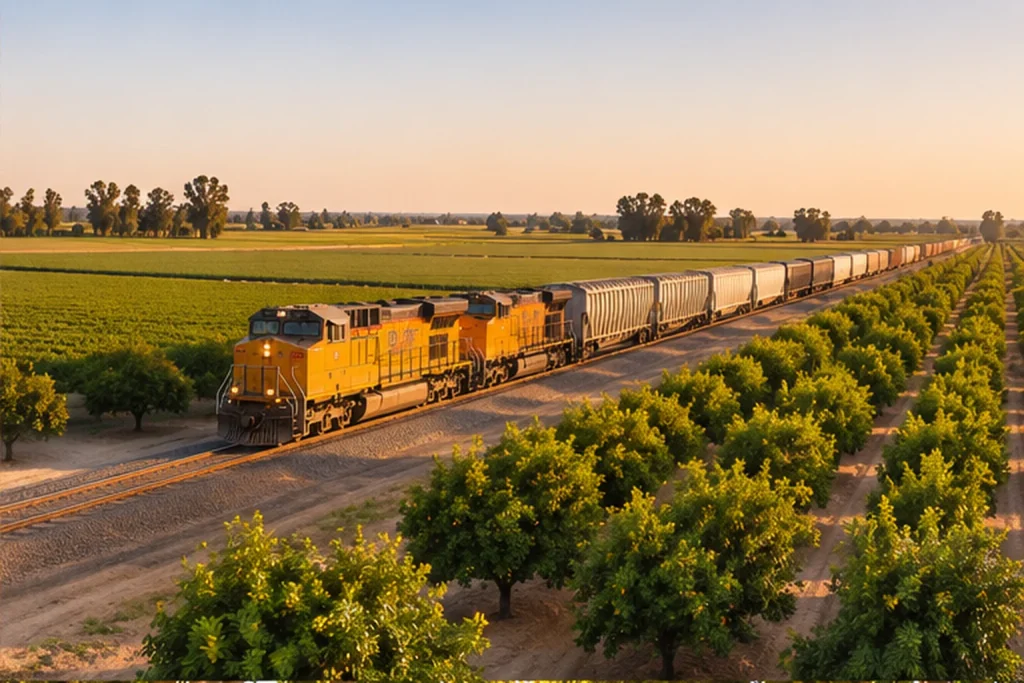
Rail access also helped agricultural producers reach markets. For farming communities, transport was closely tied to questions about how quickly crops or other products could be delivered, where storage facilities were located, and what supplies could be brought in from other places.
Connections between railroads and agriculture
The growing relationship between freight movement and agriculture explains much of the region’s built landscape. Depots, packing spaces, warehouses, and service roads supported the work of moving goods. The physical details differed by place and period, but the underlying connection between farms and rail routes is a recurring theme in the county’s early economic history.
To understand this relationship, it helps to pair railway records with water history. The development of irrigation and land use around Tulare Lake influenced where farming expanded, while transport routes helped connect production to customers farther away.
The workers and communities behind the tracks
Rail history can become overly focused on companies and machinery. The workers who constructed and maintained lines, handled freight, served travelers, and established businesses around stations deserve equal attention. Local community history offers a more complete picture than a list of railway milestones.
The China Alley Preservation Society describes how Chinese immigrants arrived in the Hanford area during the period of railway expansion, with some initially connected to railroad work and others involved in agriculture. Their businesses and social institutions later became an enduring part of downtown Hanford. Our China Alley feature explores that connection in greater depth.
That is why labor history belongs alongside transportation history. Track construction opened routes, but people also built neighborhoods, families, and cultural institutions. Examining both kinds of evidence shows the human consequences of infrastructure choices.

Not every railway story was a story of agreement
Railroads also became part of conflicts over land. The 1880 Mussel Slough confrontation is a significant example associated with the county’s wider history. California State Parks describes the deadly dispute between settlers and railroad interests over land titles near Hardwick. Its account identifies seven people who died in the confrontation.
This episode should not be reduced to a dramatic anecdote. It points to serious disputes about property, power, legal arrangements, and settlement. Historical interpretation benefits from the original documents and from acknowledging that participants understood the conflict differently.
The railroad after the founding years
As highways, trucks, and other forms of transportation expanded, the role of individual rail facilities changed. Some railroad-oriented structures remained in active use; others found new purposes or disappeared. A town’s downtown can retain the influence of a former route even when a visitor no longer sees the original station building.
Looking at Hanford then and now can help readers notice these longer-term changes. Street alignments, blocks, and commercial centers may reflect decisions made generations earlier.
How to follow the railroad through local history
Start with a dated map, identify an early station or track alignment, and look for nearby commercial buildings. Next, consult local histories, newspaper archives, and photographs. Compare the evidence rather than treating one image as the entire story. A map might reveal a route, while a newspaper explains how the route affected a business or community.
Rail history is most engaging when it connects large developments to individual places. Kings County’s railroad past explains why people arrived, how farm goods moved, where shops opened, and why some public disputes became historically important. Every one of those questions offers a path toward a new story.