
Historic Hanford Then and Now: A Downtown Story
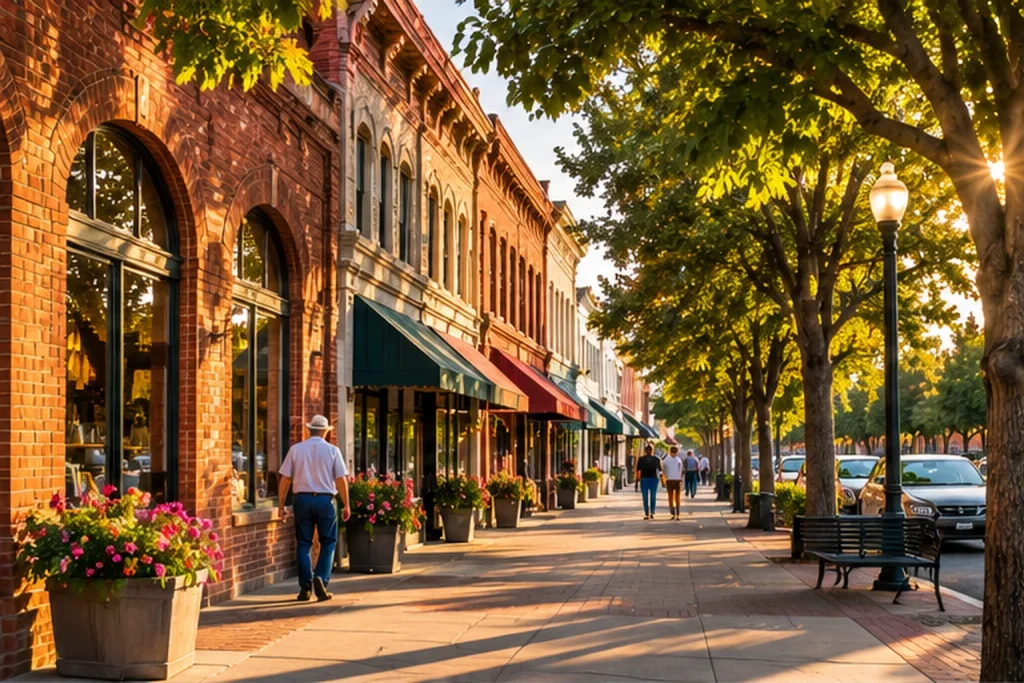
Walk through a historic downtown and it is tempting to imagine that every old-looking storefront has stood unchanged for generations. In reality, cities are collections of adjustments. Buildings are repaired or replaced, streets take on new uses, trees mature, and businesses move from one address to another. Downtown Hanford offers a particularly good setting for asking what has changed and what has endured.
A then-and-now comparison is most valuable when it does more than display two attractive photographs. The images should help answer a question about the street: why it developed, which structures survived, how people used it, or what changed in the public space between one period and another.
Start with the railroad-era town
Hanford’s official history begins its account of the town’s development in 1877, when the Southern Pacific Railway laid tracks through the area. As lots were sold and trading activity grew, the settlement took shape around transportation and commerce. The City of Hanford’s history page provides a useful timeline for identifying the early influences on downtown.
That origin still matters when comparing streetscapes. Commercial buildings were placed in relation to routes used by customers, freight, workers, and travelers. Even when uses change over time, the early street grid can shape later development. A present-day block may therefore preserve decisions made by people who lived there many decades ago.
Why the buildings may not be as old as the street
Hanford experienced destructive downtown fires in 1887 and 1891, according to the city. The damage affected the business district, and the later fire helped increase pressure for incorporation. These events remind us why an apparently historic street may contain buildings constructed at different times, including replacements for earlier structures.
A photograph of an early street should never be assigned a date solely because it contains old automobiles or ornamental brickwork. Researchers need to consider rebuilding periods, business names, street conditions, and the provenance of the original photograph.
Make a fair photo comparison
Try to match camera position, direction, and focal length. Record the date of each photograph when known. If a precise viewpoint cannot be established, describe the images as related views rather than an exact comparison. Illustrative reconstructions are useful for explaining an idea, but they should not be presented as authenticated archival photographs.
How storefronts tell a story of everyday life
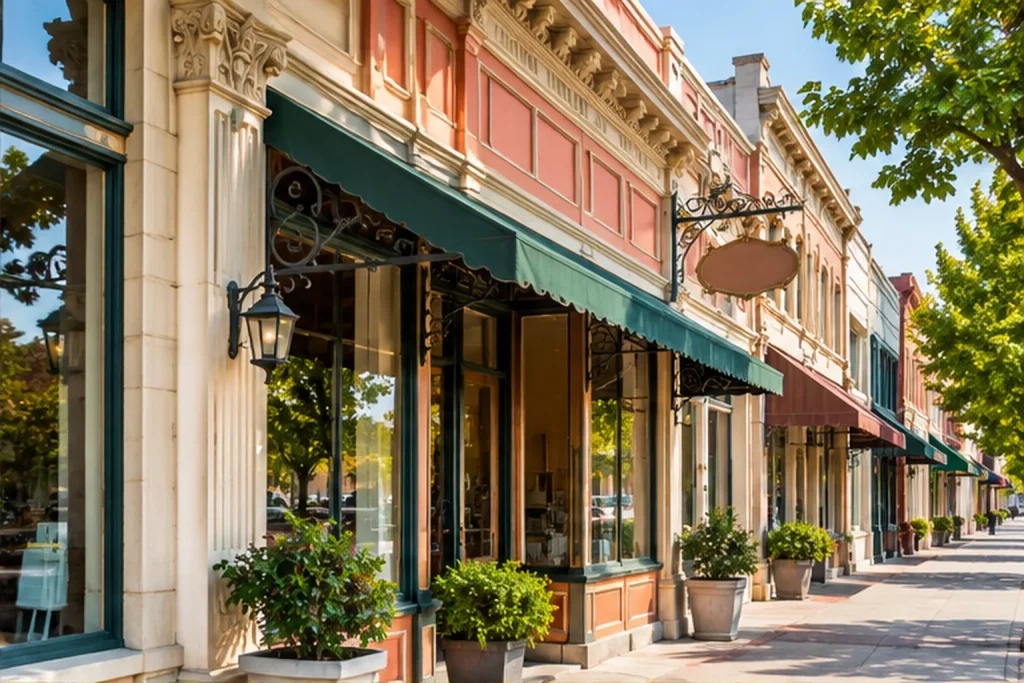
A commercial street is shaped by ordinary decisions: where people buy food, where they meet neighbors, how they reach work, and where they gather for celebrations. Historic photographs may capture this kind of life indirectly. A delivery wagon, sidewalk sign, market window, or group of pedestrians can be as revealing as a famous landmark.
Look especially for details that indicate a building’s use. Large display windows often suggest a retail function. Loading entrances may reflect storage or deliveries. Upper-floor windows invite questions about offices, lodging, or other uses, though those purposes should be verified through documents rather than guessed from appearance.
Following one address through time
Choose a storefront visible in a dated photograph and seek its address in city directories, newspaper advertisements, or property records. Then compare the names and activities associated with it across several decades. This method turns a familiar building into a record of economic and social change.
The approach works well for larger community institutions too. Our history of Hanford’s Carnegie Library follows one civic building from its early library role through later preservation and museum use.
The importance of China Alley
Downtown history is incomplete without considering the people and institutions associated with China Alley. The China Alley Preservation Society documents a Chinese American district with roots in the railroad-era development of Hanford. Its buildings help show how migration, commerce, religion, and neighborhood life were connected to the wider downtown economy.
A then-and-now exploration that includes this area can ask not only which facades survived, but also how the community’s historical contributions have been interpreted and preserved. Visit our China Alley history feature for the background behind this important district.
What changes are easiest to see?
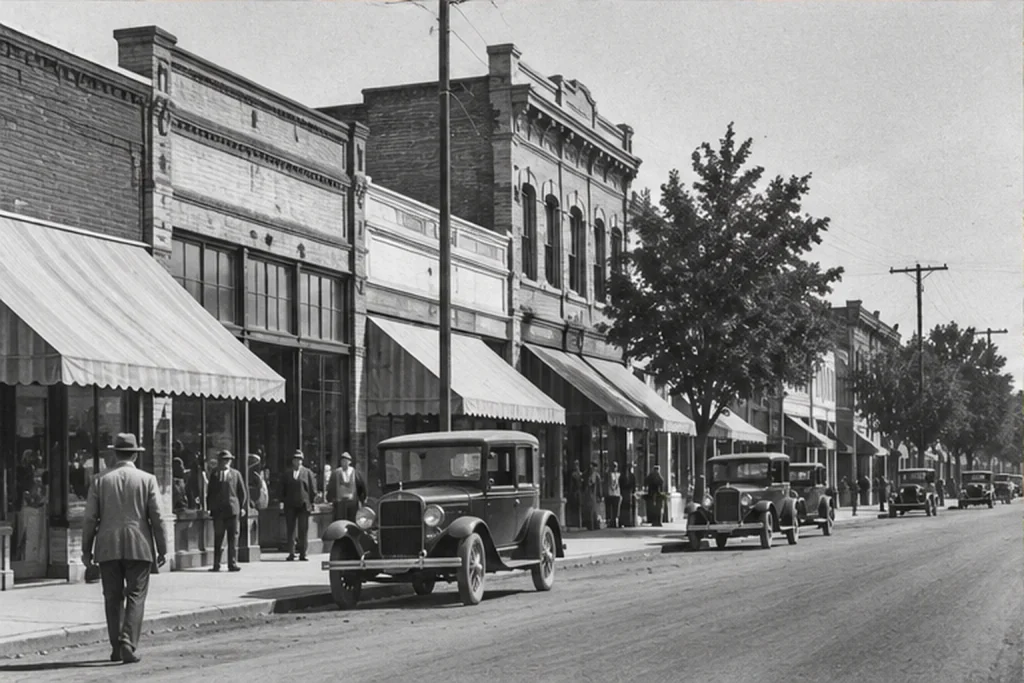
Some differences jump out immediately: automobiles replace horse-drawn transportation, trees grow taller, signs change, and storefront awnings are redesigned. Other changes take more investigation. A building may retain its facade while the interior is completely different. A public space may look similar even though its uses and surrounding traffic patterns have shifted.
For this reason, captions matter. A responsible caption identifies a documented location and date when known, explains the visual comparison, and avoids making unsupported claims about the people shown. Small pieces of accurate information build trust in a photo collection.
Old photographs are sources, not decoration
Historical images can be powerful, but their origin determines how much they can tell us. An archive might provide an exact photographer and date; a family album might supply only a remembered location; an undated postcard may show a staged or commercially edited scene. Each requires a slightly different treatment.
Start with the Kings County Library’s historical photograph resources, then consult local newspapers and institutional records where possible. If an image is used with permission, retain its credit and any use restrictions.
Create your own historic downtown reading trail
Begin with the railway’s influence on town planning. Continue to a street where the buildings illustrate later commercial growth. Include China Alley to explore community contributions, then add a civic institution such as the Carnegie building. End with a documented photograph from a later decade and compare the city’s changing uses.
This trail connects individual buildings to wider questions about work, migration, rebuilding, and public life. It also gives readers a reason to explore our railroad history and other Kings County stories, rather than treating each landmark as a disconnected attraction.
A downtown that keeps changing
Historic Hanford is not a frozen picture. Its streets hold traces of different periods, and those traces become more meaningful when compared with careful research. The best then-and-now stories celebrate what remains while honestly explaining what changed, what was lost, and what the surviving evidence cannot fully answer.