
From Library to Local Landmark: Hanford’s Carnegie Building
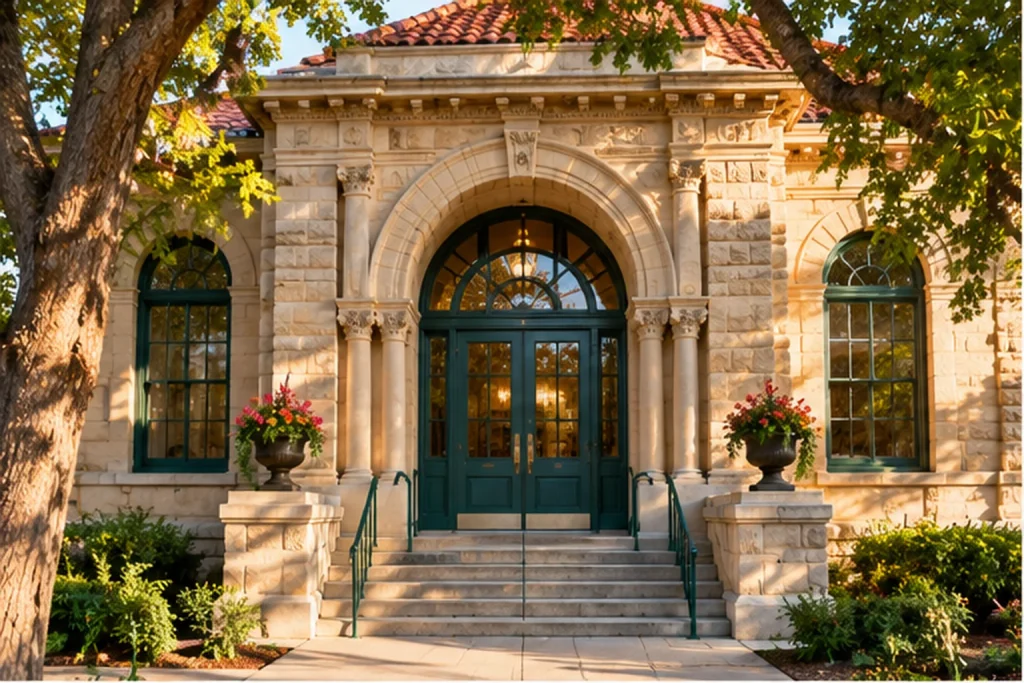
Some historic buildings tell two stories at once: the reason they were built and the new role they found when their original purpose changed. Hanford’s Carnegie Library is a notable example. The building connects the city’s early enthusiasm for reading and public education with later efforts to preserve and interpret Kings County history. Its story begins before its doors opened and continues beyond its years as a working library.
Looking at this building offers a useful way to explore local history through a single address. The architecture attracts attention, but the greater story lies in the citizens who organized a reading room, the civic choices that made a library possible, and the building’s later life as a museum.
Before the Carnegie building: a reading room
According to the Kings County Library’s historical account, Hanford’s first public reading room was established in 1891. Local residents donated books, and fundraising events helped support the growing collection. These details show that the desire for public access to reading materials existed before the formal Carnegie library was constructed.
A reading room was a practical community project. It created a place to encounter ideas, follow events, and develop habits of shared learning. In a growing town, such a space also represented an investment in civic life. Books, newspapers, and public information connected residents with places and debates beyond the immediate neighborhood.
How community effort led to a new building
The library’s history records that trustees approached city leaders in 1902 about applying for funds from Andrew Carnegie. The city agreed to provide a site and a continuing budget. The successful application supported construction of a new library, which opened in February 1906 with a gift of $12,500 from Carnegie.
These decisions are worth noticing because the building did not appear simply through a donor’s generosity. Local officials and residents had to organize and commit resources. The eventual library reflected both outside financial support and long-term community responsibility.
A research question for old photographs
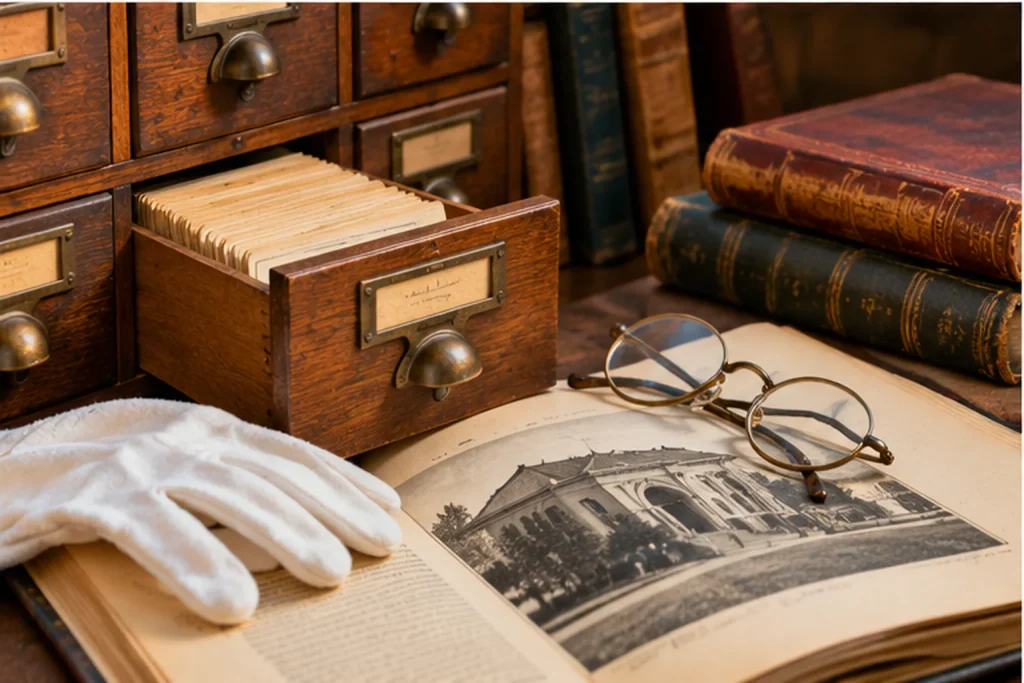
When you find an early photograph of the building, ask whether it shows the original library period, a later alteration, or a scene after its conversion. A postcard may emphasize the facade while a newspaper image reveals the building’s surroundings. Compare the caption, date, and visible streetscape before assuming two images belong to the same decade.
The architecture of a civic landmark
The county library describes the 1906 building as Romanesque in style. Heavy-looking masonry, arches, and carefully considered entrances are among the features commonly associated with this architectural tradition. Buildings of this kind were designed not only to house books but also to convey a sense of public importance.
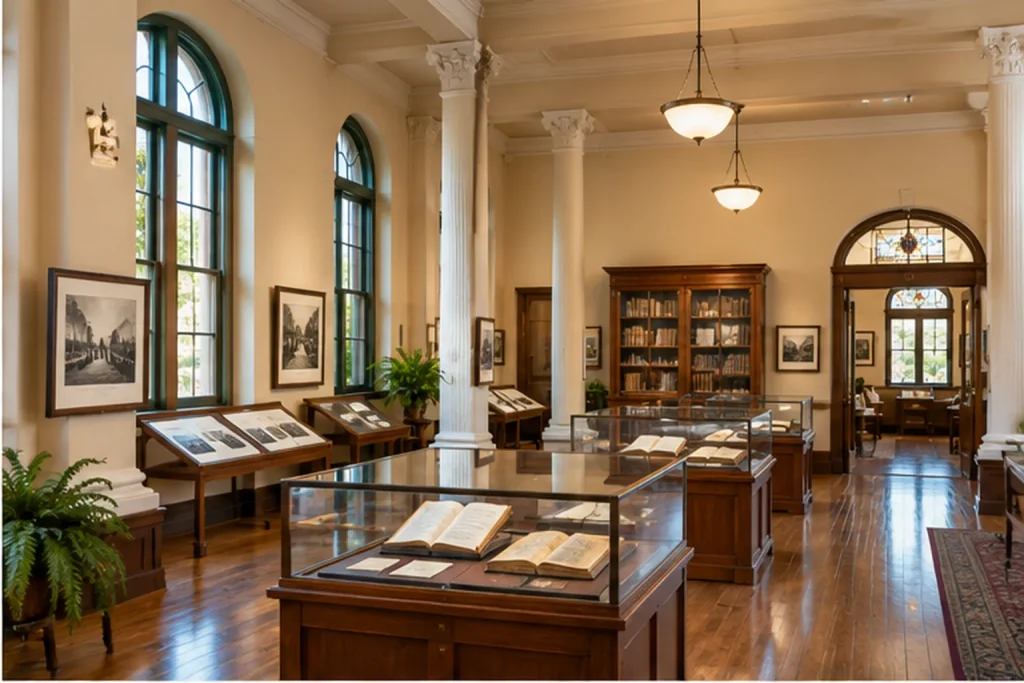
For local-history readers, architectural style is a starting point rather than the entire explanation. How did visitors approach the entrance? What did the reading spaces offer? How did the building relate to nearby streets and other public institutions? These questions connect an impressive exterior with the lives of the people who used it.
From city library to countywide service
The Kings County Library history explains that the county library was established by a Board of Supervisors resolution in November 1912. For a period, city and county library services shared operations, using space in the Carnegie building. This wider role connects one building to the spread of public reading and information services throughout the surrounding communities.
It also reminds us that a library system is more than a building. The people who catalog materials, organize collections, support readers, and maintain branches make the institution useful. When researching historic education and civic life, records of library services can reveal how a growing county met the needs of residents beyond its principal city.
A new role after the library moved
The building remained the public library until 1968. After renovation in 1974, it became a local museum, as described in the county library’s historical summary. This change extended the building’s public purpose while shifting the activities inside it. Instead of primarily circulating books, the site helped tell stories through objects, records, and exhibits.
Reusing an older public building can preserve a familiar landmark while giving it a function suited to a later community. At the same time, adaptive reuse presents challenges: historic materials need care, public access needs change, and interpretation must stay connected to reliable documentation. The building’s continued use invites visitors to think about preservation as an ongoing process.
Why the Carnegie building belongs in a wider history trail
The building is associated with Hanford’s civic growth, but it is also an excellent stop in a larger investigation of downtown development. Its story can be paired with historic Hanford streetscapes, local business records, and the development of nearby cultural institutions. Each comparison shows how the city changed while keeping parts of its older identity visible.
Three ways to read the building
First, look at it as a piece of architecture. Notice the entrance, proportions, windows, and construction details. Second, look at it as a public institution. Ask what kinds of services it offered and who could use them. Third, look at it as a preserved place. Consider how the function changed while the historic structure remained important to the community.
These three approaches are useful for other Kings County landmarks as well. A courthouse, station, school, or former shop may also reveal differences between its original purpose and its present use. Local history becomes richer when researchers connect those differences to dated evidence instead of relying only on appearance.
Researching the library’s story responsibly
Start with the Kings County Library’s published history, then compare it with historical photographs and museum records. The Carnegie Museum of Kings County is a useful place to learn about local exhibitions and collections. California’s historic resource listings provide another reference point for the building’s recognized significance.
Separate confirmed dates from architectural interpretations, and label modern illustrative images clearly. If a photograph is undated, note that uncertainty. A careful description is usually more valuable than a dramatic but unsupported claim about a building’s past.
A building that continues to teach
Hanford’s Carnegie Library tells a story of local organization, education, public investment, and preservation. Its history began with residents who wanted access to books and continued through changing civic needs. That makes it more than a beautiful structure: it is a record of how a community created and sustained places for learning.
The next time you encounter an old public building, consider the people who imagined it, the generations who used it, and the decisions that allowed it to survive. Those questions can open a whole new chapter in the history of a familiar place.