
The Stories of China Alley in Hanford
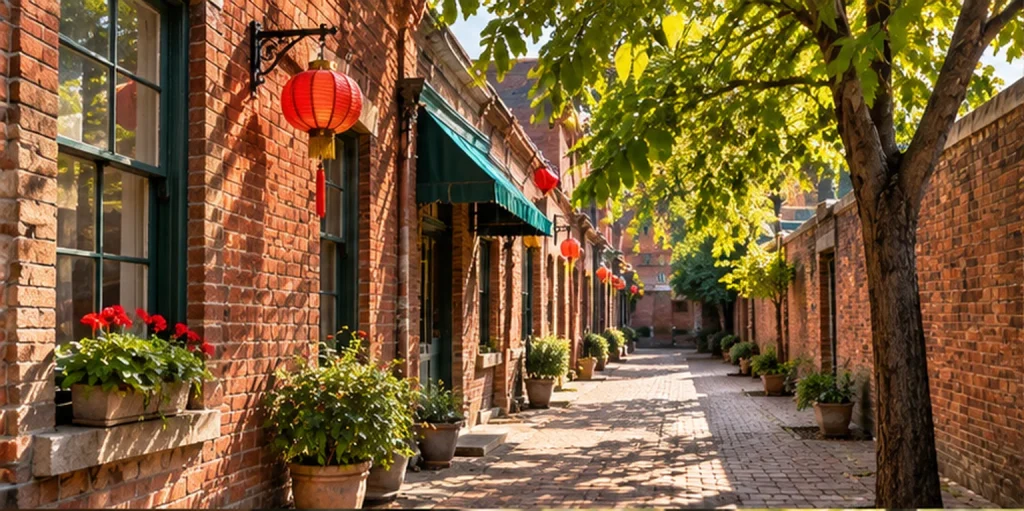
Just off downtown Hanford, China Alley offers a compact but layered introduction to the people who helped build the community. Its brick buildings recall businesses, gathering places, religious traditions, and family life that rarely fit into a simple timeline of railroad dates and town incorporations. Looking closely at the alley reveals a fuller history of work, migration, community organization, and preservation in Kings County, California.
The most useful way to approach China Alley is as a place with many interconnected stories. Its structures matter, but so do the people who used them, the businesses that served daily needs, and the continuing effort to keep this history visible.
How China Alley became part of Hanford
The China Alley Preservation Society traces the alley’s roots to 1877, when railroad expansion helped establish Hanford. Chinese immigrants came to the region for work associated with the railroads and for agricultural opportunities. Their presence was not a small footnote to the town’s growth; it helped shape the businesses and social life of the emerging community.
Early Hanford developed at a meeting point of transportation, farming, commerce, and migration. People arriving by different routes brought skills, knowledge, and community networks. To understand China Alley, it helps to read it alongside the broader story of railroads in Kings County, because the railway influenced where businesses opened and how people traveled between settlements.
Why a single street tells many stories
A narrow historic street can contain buildings with very different functions. The preservation society identifies restaurants, shops, boarding houses, laundries, herbal businesses, a school, and religious institutions within the Chinese American community. Each points to a practical part of life: finding work, preparing food, learning, receiving care, forming social ties, and maintaining cultural practices.
Instead of treating the alley as merely picturesque, look for the relationship between these places. A shop might also be a place for conversation. A school might help families maintain language and traditions. A temple can preserve aspects of community identity that official government records reveal only incompletely.
Details worth noticing in a building
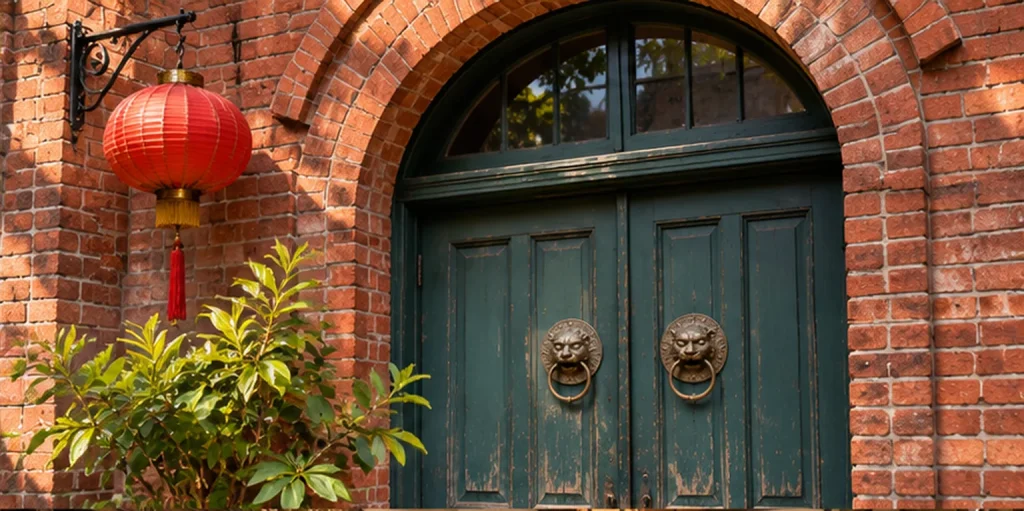
Doorways, window shapes, brickwork, signs, courtyards, and changes in floor plans can all suggest how a space was used. But architectural details are clues, not complete proof. The best interpretations connect what a visitor sees with dated photographs, oral histories, preservation records, or other reliable documentation.
Businesses, households, and community life
It is easy for local histories to emphasize only the largest companies and public officials. China Alley encourages another view. Grocers, cooks, shopkeepers, laborers, teachers, and families contributed to the daily life of Hanford. Their work connected the downtown economy with farms and transportation routes throughout the surrounding region.
Businesses also helped sustain community networks. Places where people could find familiar goods, exchange news, or share meals took on importance in an era when discrimination and exclusion shaped opportunities for Chinese immigrants. Understanding that context adds meaning to the surviving street. The buildings were not simply commercial properties; many were important spaces for belonging and mutual support.
Preservation work has to consider these human stories, not only the physical condition of bricks and timber. A restored facade can be attractive, but interpretation is richer when it introduces the individuals and institutions connected to the site.
The value of everyday records
Advertisements, store ledgers, newspaper notices, city directories, photographs, and family documents can reveal how a business changed over time. A record may identify a person or occupation that a photograph alone would not explain. Because names and spellings can differ across sources, researchers should compare several records before drawing firm conclusions.
Public collections are a useful starting point. The Kings County Library’s historical photograph resources can help readers locate imagery associated with Hanford’s past. Photographs should be credited accurately and interpreted with attention to their original dates and captions.
Why China Alley is important to preservation
The China Alley Preservation Society was founded in 1972 and describes its mission as preserving and sharing Chinese American heritage in Hanford and the surrounding area. That ongoing work shows how a historic district depends on more than architectural survival. Research, collections care, education, and community involvement all help keep its significance understandable to new generations.
One of the site’s notable cultural resources is the historic Taoist Temple. California’s Office of Historic Preservation lists the temple among Kings County’s recognized historical resources. Such designations provide useful research leads, but they do not replace the stories and perspectives of the communities associated with the site.

Seeing the alley without reducing it to nostalgia
Historic districts often invite a romantic view of the past. Brick textures, lanterns, and old storefronts can make an appealing photograph. The more important questions are what those spaces meant to the people who lived and worked there, how conditions changed, and which histories were overlooked in older narratives.
A thoughtful story should acknowledge discrimination without treating Chinese American residents only as victims. They also built businesses, sustained institutions, created cultural life, and contributed to the wider city. Both hardship and agency belong in the narrative. Where records do not establish a detail, it is better to describe the uncertainty than invent a scene for dramatic effect.
Plan a self-guided historical reading trail
Begin with the preservation society’s account of the district, then explore the surrounding street network and published photographs. Compare different periods and note which buildings still stand. Continue with the larger Historic Hanford Then & Now story to see how the commercial center developed beyond the alley.
A reading trail can include a building detail, a biography, a business history, and a connection to the railroad. This creates a more meaningful visit or virtual exploration than a short list of picturesque photo stops.
What China Alley teaches about local history
China Alley demonstrates that a county’s history is built through many overlapping communities. Rail lines and land records explain part of Hanford’s growth, but they cannot describe everything people experienced. Cultural institutions, neighborhood businesses, family histories, and preservation efforts provide another essential layer.
The alley continues to invite new questions. Who occupied particular buildings at different times? How did business activities change? Which stories survive in photographs, and which require deeper research? Asking those questions is one of the best ways to respect the complexity of the place.